Spousal Maintenance in Texas: 2026 Updates to Eligibility and Duration
Texas has always made spousal maintenance harder to get than most other states, but the rules for who qualifies and how the courts calculate it haven't stood still. Our Denton County spousal maintenance lawyers have prepared this guide to walk you through the current eligibility requirements, how long maintenance can last, and two 2025 Texas Supreme Court decisions that are actively reshaping how judges apply both.
What Spousal Maintenance Actually Is in Texas
Spousal maintenance is court-ordered financial support paid by one spouse to the other after divorce, meant to cover a gap in basic living expenses, not to maintain a couple's marital lifestyle or equalize their incomes. It's also worth knowing that there are really two different concepts people mean when they say "alimony" in Texas:
- Court-ordered maintenance: This only applies if a judge orders it, comes with strict eligibility rules, and is capped in amount and duration.
- Contractual alimony: Spouses agree to it themselves as part of a settlement and write it into the decree. It isn't subject to those same caps at all.
If a settlement offer includes alimony terms that look larger or longer than what a judge could order, that's usually because it was privately agreed to, not court-ordered.
Who Actually Qualifies for Court-Ordered Maintenance?
.webp)
Texas requires a spouse to meet one of four specific conditions before a judge can even consider ordering maintenance:
- The paying spouse was convicted of, or received deferred adjudication for, a family violence offense against the other spouse or their child within two years of the divorce being filed, or while it's pending.
- The marriage lasted 10 years or longer, and the spouse seeking support lacks the property and earning ability to cover their own reasonable needs.
- The spouse seeking support has a physical or mental disability that prevents them from earning sufficient income.
- The spouse seeking support is caring for a child of the marriage whose disability requires substantial care, preventing them from working.
Even meeting one of these doesn't guarantee an award. Texas law starts from a presumption against maintenance, and the spouse asking for it generally has to show they made a genuine effort to find work or develop job skills during the case, not just that they'd prefer not to.
How Much and How Long: The Statutory Caps
If a court does order maintenance, the amount is capped at whichever is lower: $5,000 a month, or 20% of the paying spouse's average gross monthly income. Duration is tied to how long the marriage lasted:
- 10 to 20 years married: Up to five years of maintenance.
- 20 to 30 years married: Up to seven years of maintenance.
- 30 years or more: Up to 10 years of maintenance.
- Disability of the recipient, or a disabled child requiring ongoing care: Potentially open-ended, for as long as the qualifying condition continues.
These are ceilings, not guarantees. Judges are directed to order maintenance for the shortest period reasonably necessary for the receiving spouse to become self-supporting, so a five-year cap doesn't mean every eligible case gets the full five years.
#cta_start
Get a Clear Read on Your Maintenance Case
Whether you're the one who might owe maintenance or the one who might need it, the eligibility rules and caps only tell part of the story. Contact a leading attorney at North Texas Family Lawyers to get the legal guidance you need.
#cta_end
The 2026 Update That Matters: Mehta v. Mehta
In June 2025, the Texas Supreme Court issued a decision that's now shaping how maintenance eligibility gets decided in nearly every case involving children: Mehta v. Mehta. The case involved a mother who had left her job to become the primary caregiver for one of the couple's triplets, a child with significant medical needs.
A lower appeals court had reversed her maintenance award, reasoning that her child support payments left her with enough money to cover her own needs. The Texas Supreme Court disagreed and drew a clear line: a court cannot simply treat a recipient's child support as money fully available for their own personal expenses.
Child support is meant to cover the child's needs, and a judge deciding whether a spouse "lacks sufficient property" to support themselves has to account for what child-related costs that support is actually covering, not just count the whole payment as the recipient's own income. The Court also confirmed that qualitative testimony, not just detailed spreadsheets of expenses, can be enough to support a maintenance award.
The practical effect is that parents caring for a child with significant needs, and really any parent receiving child support, are on firmer ground when the numbers alone don't tell the full story of what they can afford.
When Maintenance Can End Early: Begala v. Begala
Maintenance doesn't always run its full term. Texas law ends the obligation automatically if either spouse dies or if the recipient remarries, and it can also be terminated if the recipient moves in with a new partner. What actually counts as "cohabiting" for that purpose used to be a fuzzy question, until Begala v. Begala, which was decided in 2025.
In that case, a paying spouse sought to end his maintenance obligation after his ex-wife spent over 100 consecutive days at her boyfriend's home. She argued she was only staying there temporarily while her own home was being renovated.
The court clarified that a recipient doesn't need to intend to live somewhere permanently for it to count. What matters is whether the arrangement amounts to a real, ongoing romantic relationship at a shared residence, looking at factors like how long the relationship has gone on, how much time the couple spends together, and how intertwined their day-to-day lives have become.
For anyone paying or receiving maintenance, this means a new relationship doesn't have to come with a lease and a joint bank account to raise a real legal question about whether support should continue.
Getting Around the Caps: Contractual Alimony
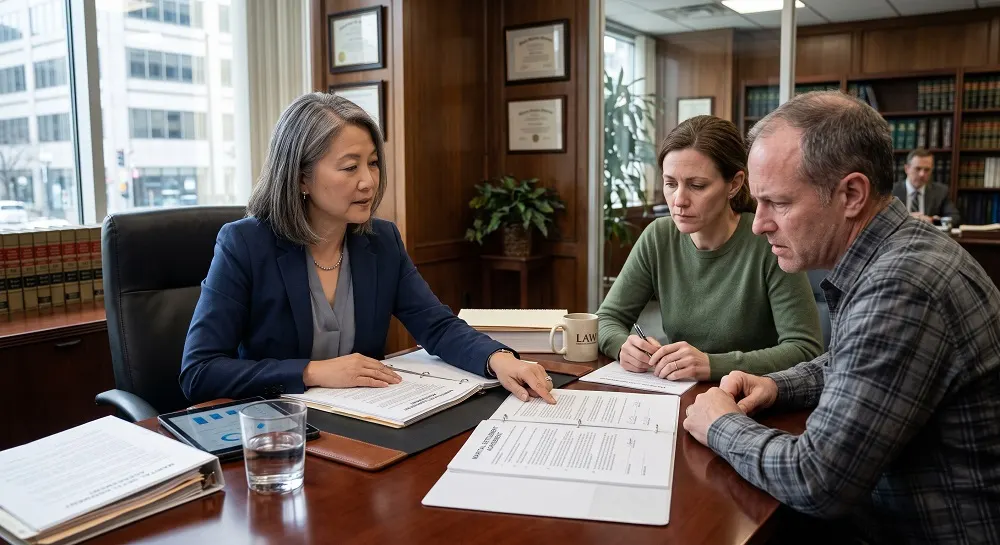
Court-ordered maintenance is capped in both amount and time, so many settlements built through negotiation, mediation, or a contested divorce that resolves short of trial include contractual alimony instead of, or in addition to, statutory maintenance.
Contractual alimony is a private agreement written into the decree, so it isn't limited by the $5,000/20% cap or the marriage-length duration tiers. It also isn't enforceable through the same contempt process as court-ordered maintenance if a payment gets missed.
This distinction matters most in high net worth divorce cases, where the statutory cap often represents a small fraction of what a spouse might otherwise negotiate, and where a business owner's true gross income can be a contested issue in its own right.
Modifying or Enforcing a Maintenance Order
A maintenance order isn't necessarily locked in place for its full term. Either spouse can ask the court to modify it if there's been a material and substantial change in circumstances, such as a significant change in income or the recipient's ability to work. If a paying spouse simply stops paying, the recipient can ask the court to enforce the order, including through income withholding directly from the paying spouse's employer.
Where This Leaves You in 2026

Texas hasn't rewritten its spousal maintenance statute this legislative cycle, but the two rulings above are already changing outcomes in courtrooms across the state.
Mehta gives caregiving spouses a stronger footing when a child's needs eat into what looks, on paper, like disposable income. The precedent set by the Begala case gives both sides a clearer understanding of when a new relationship raises the cohabitation question.
Either way, whether you're trying to qualify for maintenance, calculate a fair amount, or determine whether it's time to ask a court to end it, the facts of your specific situation, not just the statutory formula, are what will decide the outcome.
You Don't Have to Untangle This Alone
Spousal maintenance cases are about the details: what the marriage actually looked like, what a child's needs really cost, what a paying spouse actually earns. Getting those details in front of the right court, framed the right way, is where an experienced attorney makes the difference.
If you're heading into a divorce where spousal maintenance is likely to be an issue, on either side of the request, North Texas Family Lawyers can walk you through what to expect and how to build your case.
Contact us today to get started.
#faq_start
Who qualifies for spousal maintenance in Texas?
A spouse must meet one of four conditions: the paying spouse has a qualifying family violence conviction, the marriage lasted at least 10 years and the requesting spouse lacks sufficient property and earning ability, the requesting spouse has a disability, or the requesting spouse is caring for a disabled child of the marriage.
How long does spousal maintenance last in Texas?
Duration is tied to the length of the marriage: up to five years for marriages of 10 to 20 years, up to seven years for 20 to 30 years, and up to 10 years for marriages of 30 years or more. Maintenance tied to a disability can potentially continue as long as the disability does.
How much spousal maintenance can a Texas court order?
Court-ordered maintenance is capped at whichever is lower: $5,000 per month or 20% of the paying spouse's average gross monthly income.
Does child support count against me when I'm trying to qualify for maintenance?
Not automatically. Under the Texas Supreme Court's 2025 ruling in Mehta v. Mehta, a court can't simply treat the full amount of child support as money available to cover the recipient's own needs. Judges are now required to account for the child-related expenses that support is meant to cover.
Can spousal maintenance end if I move in with someone new?
It can. Under Begala v. Begala, a 2025 ruling, a recipient doesn't need to intend to live somewhere permanently for it to count as cohabitation. Courts look at the length and nature of the relationship and how intertwined the couple's lives have become.
#faq_end