Denton County Visitation Rights Lawyers










Experienced Visitation Rights Lawyers in Denton County, TX
At North Texas Family Lawyers, we represent parents and family members across Denton County in visitation matters involving possession schedules, parenting time disputes, enforcement issues, and requests to modify existing orders.
When disagreements over visitation become difficult or emotionally charged, our team provides experienced guidance and practical legal support to help protect your role in your child’s life.
- Unmatched ExperienceWe bring more than 50 years of legal experience to custody and visitation matters involving families across Denton County.
- Trial-ReadyWhen visitation disputes cannot be resolved through agreement alone, we are prepared to advocate for our clients in court.
- Genuine Client CareWe provide clear advice, responsive communication, and steady support throughout each stage of the process.
Understanding Visitation Rights in Texas
Texas law recognizes the importance of preserving a parent’s relationship with a child whenever possible. In custody matters, visitation is often referred to as possession and access, meaning the time a parent has with the child under a court order. Even when parents are no longer living together, each parent’s role in the child’s life remains important, which is why clear visitation terms matter.
When parents are able to work together, they may be able to reach an agreement on a visitation schedule outside of court. If they cannot, the issue may need to be resolved through negotiation, mediation, or litigation. Either way, the goal is to create a structure that protects parental rights while supporting the child’s stability and well-being.
#faq_start
Possession and Access
Texas visitation matters typically focus on possession and access schedules. These schedules can follow a more standard structure or be adjusted to reflect the child’s needs, the parents’ circumstances, and the realities of everyday life.
Why Visitation Disputes Arise
Disputes can develop when parents disagree about scheduling, communication, transportation, missed visits, or changes in circumstances. Even when an order is already in place, practical issues can still create conflict that may require legal intervention.
Why Early Guidance Matters
Visitation issues can escalate quickly when communication breaks down or a parent is not following orders. Early legal guidance can help clarify your options, protect your rights, and create a stronger plan for addressing the dispute.
#faq_end
Common Visitation Issues
Parenting Time and Possession Schedules
Visitation often begins with deciding when each parent will spend time with the child. We help clients establish possession schedules that are clear, workable, and tailored to the needs of the family.
Visitation Modifications
As children grow and circumstances change, existing visitation arrangements may no longer fit the family’s needs. We help clients pursue or respond to requests to modify visitation orders when a change is appropriate.
Enforcement of Visitation Orders
When one parent does not follow a court-ordered visitation schedule, legal action may be necessary. We help clients address violations of visitation orders and seek enforcement through the proper legal channels.
Supervised and Restricted Visitation Issues
Some cases involve requests for supervised visitation or restrictions based on safety, conflict, or other concerns. We represent clients on both sides of these issues with careful attention to the facts and the child’s best interests.
Holiday and Special Schedule Disputes
Disagreements over holidays, school breaks, vacations, and special occasions can create ongoing tension if not clearly addressed. We help clients resolve these issues and seek arrangements that reduce confusion and conflict moving forward.
Visitation Disputes Involving Relocation or Distance
When parents live farther apart, visitation becomes more complicated. We help clients address parenting time concerns involving travel, scheduling, distance, and other factors that may affect regular access to the child.
Common Visitation Schedules
There is no single visitation schedule that works for every family. The right arrangement depends on the child’s age, the parents’ work schedules, school commitments, distance between households, and the overall needs of the family. Still, many parents begin with a more standardized schedule and adjust from there.
Common examples include the 4-3 schedule, the 2-2-5-5 schedule, or modified versions of those arrangements that account for alternating weekends. Any visitation schedule should also address holidays, summer possession, school breaks, transportation responsibilities, and any special concerns that may arise when parents live farther apart.
Parenting Plans
Once parents reach an agreement on custody and visitation, those terms are typically set out in a written parenting plan. A parenting plan may address matters such as conservatorship, possession schedules, decision-making responsibilities, and child support, and it can later be incorporated into the final court order.
Parents who are able to resolve these issues cooperatively often have more flexibility in shaping a plan that fits their family’s needs. These agreements may be reached through direct negotiation between attorneys or through mediation. When agreement is not possible, the court may need to decide the terms.
#cta_start
Protect Your Time With Your Child
Visitation disputes can have a lasting effect on your relationship with your child if they are not addressed carefully and promptly. Schedule a confidential consultation to discuss your situation and get experienced legal guidance on the next steps.
#cta_end
Enforcing Visitation Orders
Once a judge adds visitation terms to a court order, they become legally enforceable. If one parent refuses to comply with the order, the other may be able to seek enforcement through the court.
It is also important to remember that visitation and child support are separate issues. A parent generally cannot deny court-ordered visitation simply because the other parent is behind on support, and a parent cannot stop paying support because there are visitation problems. Parents must address each issue through the appropriate legal process.
Modifying a Visitation Order
As children grow and family circumstances change, an existing visitation order may no longer work as intended. In some situations, a parent may ask the court to modify the order based on a significant change in circumstances or another recognized basis for modification. The specific facts of the case will determine whether a change is appropriate.
Modification requests may arise when parents relocate, work schedules change, the child’s needs evolve, or the current arrangement becomes difficult to maintain. Addressing these issues through a formal modification can help reduce future conflict and create a more stable plan moving forward.
Visitation Rights Process in Denton County, TX
At North Texas Family Lawyers, we help clients address possession and access disputes with a clear strategy and close attention to the family’s specific circumstances.
- Initial consultation: We begin with a confidential consultation to understand the visitation issue, the current order, if one exists, and the concerns you need addressed.
- Case evaluation and strategy: Our team reviews the family situation, legal issues, and practical concerns involved so we can determine the strongest path forward.
- Filing or responding: Depending on your position, we help initiate or respond to legal action involving visitation, modification, or enforcement.
- Information gathering: We work with clients to collect schedules, communications, prior orders, and other records that may support the case.
- Negotiation and resolution efforts: When appropriate, we pursue opportunities to resolve visitation disputes through negotiation, mediation, or agreed revisions.
- Court representation when needed: If the matter cannot be resolved outside of court, we are prepared to advocate for your interests before the judge.
- Final orders and next steps: Once the issue is resolved, we will help address any remaining legal steps and make sure the new or existing order is clear moving forward.
Our Attorneys

William F. Neal
Texas Board Certified Family Law Attorney- More than 50 years of legal experience in Texas
- Texas Board Certified in Family Law since 1993
- Widely recognized for his professional excellence, unwavering dedication to his clients, and leadership in the field

James A. Giries
Family Law Attorney- Air Force veteran with a disciplined, honorable, and service-driven approach
- Former owner of an independent law practice for over a decade
- Significant experience and deep knowledge in divorce, custody, property division, and support matters

Trenton E. Wright
Family Law, Estate & Probate Attorney- Solving clients’ family law and estate issues with decades of advanced legal knowledge and experience
- Behind-the-scenes knowledge as a former owner of a real estate and title practice
- Serious background in property, business, and financial matters
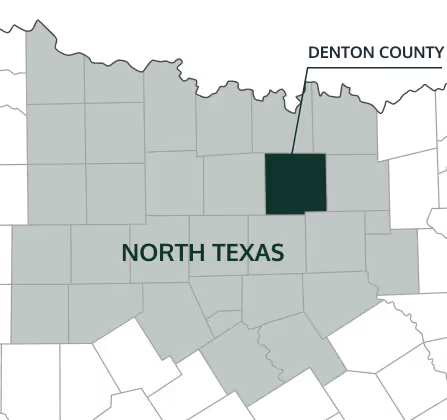
Serving Denton County And Beyond
Suite 150 Lewisville, TX 75067

North Texas Family Lawyers represents parents and families throughout Denton County and the surrounding communities from our office in Lewisville. Our premier firm serves clients who need trusted guidance, responsive communication, and experienced representation in visitation and child custody matters.
- Flower Mound
- Highland Village
- Westlake
- Bartonville
- Trophy Club
- Denton
- Lewisville
- The Colony
- Corinth
- Shady Shores
- Little Elm
- Carrolton
- Grapevine
- Argyle
- Frisco
- Fort Worth
Whether you are trying to establish visitation, enforce an order, or respond to a dispute that has become more difficult over time, we are proud to serve clients across Denton County with practical, strategic counsel.
Talk to a Denton County Visitation Rights Lawyer
Questions about visitation can quickly become urgent when your time with your child is affected. Complete the form below to request your confidential consultation and speak with an experienced visitation rights lawyer about your situation.
FAQs
Yes. In some cases, parents can modify visitation orders when circumstances change enough that a different arrangement is needed.
A parent may be able to seek enforcement through the court if the existing order is not being followed. The right approach depends on the facts, the wording of the order, and the history of the dispute.
Yes. In some situations, a court may order supervised visitation if there are concerns about safety, conflict, or other important issues affecting the child.
Legal representation can be especially helpful when visitation issues involve repeated conflict, enforcement problems, requested restrictions, or proposed modifications. Early legal guidance can help you better understand your options and protect your role in your child’s life.
When Texas courts make decisions about custody and visitation, the guiding standard is the best interests of the child. That may include:
- The child’s relationship with each parent
- Each parent’s ability to meet the child’s physical and emotional needs
- The stability of each home environment
- Whether there are concerns involving abuse, neglect, or other risks
Courts may consider the preference of a child who is at least 12 years old in some situations. Visitation outcomes can vary widely from case to case. Strong preparation and clear evidence can make a meaningful difference when the court must decide these issues.